Virtual Staging for Vacant Units in Dubai: What's Actually Regulated
Search "virtual staging Dubai disclosure rules" and you'll find plenty of vendor pages confidently stating that RERA or the Dubai Land Department (DLD) requires staged photos to be labeled. We went looking for the actual regulation text those claims point to, and didn't find one. That doesn't mean virtual staging is risk-free in Dubai — it means the real risk sits under a broader rule, not a staging-specific one, and it's worth understanding the difference before you publish a vacant-unit listing with virtual furniture in it.
Key takeaways
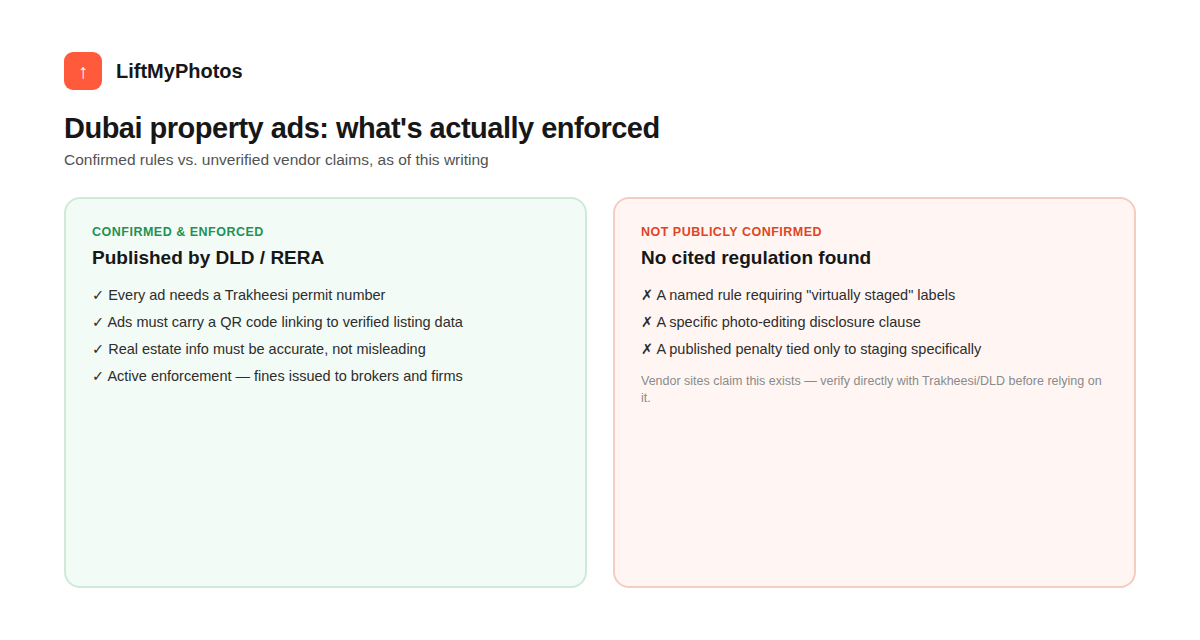
- Every Dubai property ad legally requires a Trakheesi permit number and a QR code linking to verified listing data
- DLD/RERA actively fines brokers and firms for misleading advertising — enforcement is real, not theoretical
- We could not find a published RERA/DLD rule specifically naming virtual staging or requiring a staging disclosure label
- Vendor claims that such a rule exists appear to be unverified marketing claims, not cited regulation
- Labeling staged photos clearly is still the safer practice, given the broader "don't mislead" enforcement standard
What Dubai actually, confirmably regulates
The Trakheesi advertising permit system is real and actively enforced: every real estate advertisement published in Dubai — online, print, or billboard — requires a permit number issued through the system, and recent ads are required to carry a QR code linking back to verified property data. Enforcement has included real financial penalties; Gulf News and other outlets have reported DLD fines against dozens of brokers and firms for advertising violations, including instances described as misleading potential tenants with inaccurate photos. The regulatory substance here is about accuracy and permitting broadly, not a specific clause written around virtual staging.
What we couldn't verify
Several vendor and marketing pages state, as fact, that RERA requires virtually staged images to carry a specific disclosure label. We searched for the underlying regulation text, DLD circular, or RERA directive those claims reference and didn't find one published. That's a meaningful gap — it means those claims should be treated as unverified until an agent or brokerage confirms them directly with the Trakheesi system or DLD, not repeated as settled fact. We're flagging this explicitly rather than citing it as true, because getting this wrong in either direction has real consequences.
The safer practice, rule or no rule
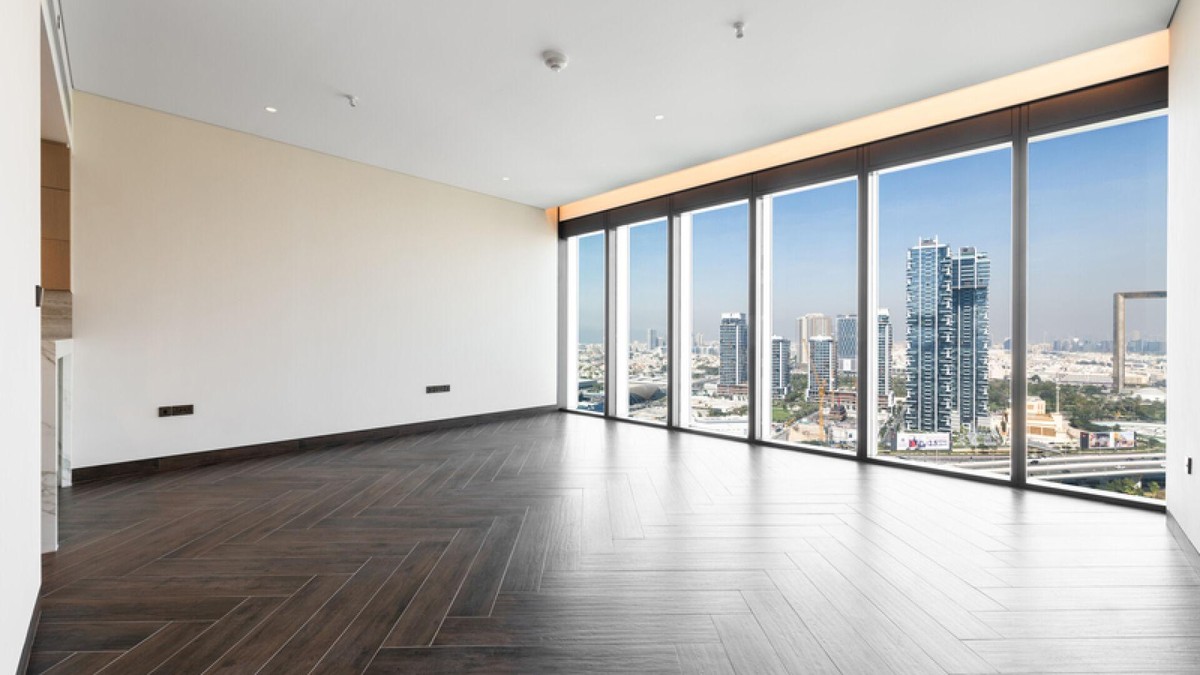
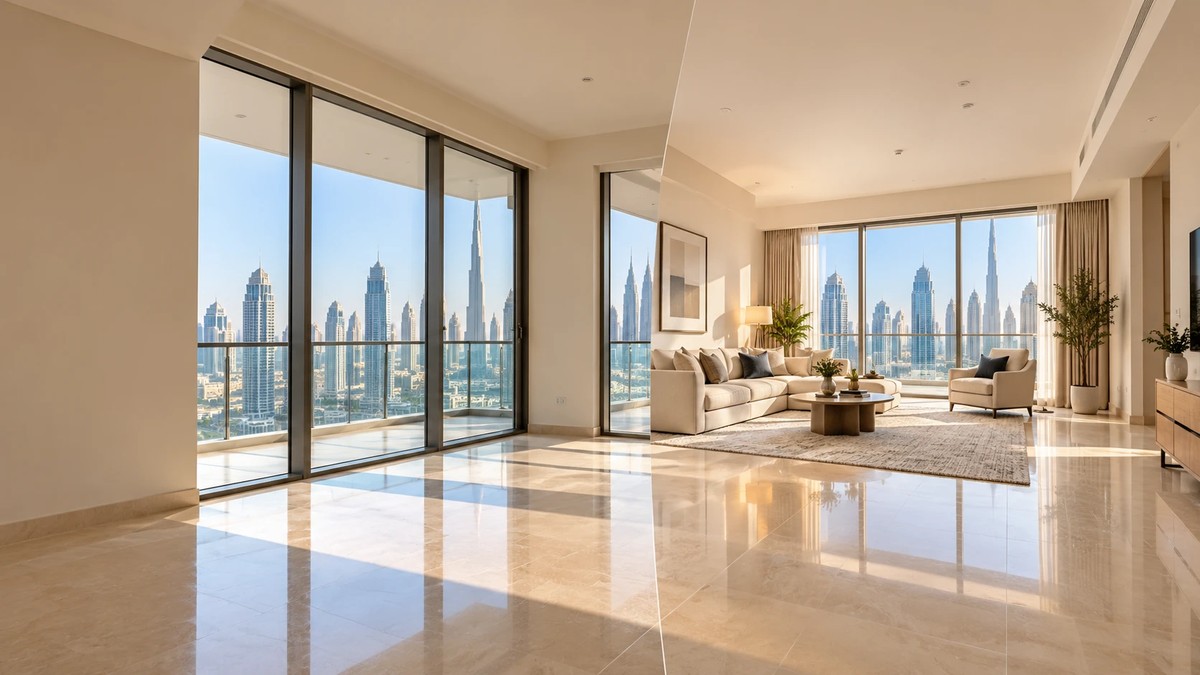
Given that the confirmed, enforced standard is broad — don't mislead, keep ads accurate — a vacant unit shown with virtual furniture sits closer to that risk than a straightforward enhanced photo of a room exactly as it exists. The lowest-risk approach, independent of whether a specific labeling rule exists: caption virtually staged photos clearly ("Virtually staged — unit shown unfurnished"), and keep at least one genuinely unfurnished shot in the gallery so a viewer isn't surprised at a viewing. This costs nothing and removes the misleading-advertising exposure almost entirely, regardless of how the specific-disclosure-rule question eventually gets settled.
Virtual staging vs. photo enhancement — not the same tool
Worth being direct about this: LiftMyPhotos does photo enhancement, not virtual staging. It corrects exposure, color, and perspective, and removes movable clutter from a photo of a room exactly as it was shot — it doesn't generate furniture into an empty room. If a unit is vacant and you want to show it furnished, that's a separate virtual-staging service, and whichever one you use, it should be clearly disclosed per the practice above (see our broader piece on where editing crosses into misrepresentation). If the unit already has furniture and the photos just need to look professional, that's exactly the problem enhancement solves.
Is virtual staging itself banned in Dubai?
No — nothing we found suggests virtual staging is prohibited. The open question is specifically around a formal disclosure/labeling requirement, which we could not verify against a published regulation.
What happens if a listing is reported as misleading?
Based on reported enforcement history, DLD/RERA has issued fines to brokers and firms over misleading advertising, in some cases tied to photos that didn't represent the property accurately. The enforcement mechanism exists and has been used.
Where should I check for the current, official rule?
Directly with the Trakheesi advertising permit system or the Dubai Land Department — not a vendor's marketing page. Regulations and enforcement guidance can change, and a vendor has an incentive to describe rules in whatever way sells their service.
Have furnished listing photos that just need to look professional? Try LiftMyPhotos free, no credit card required.
Related reading


Try LiftMyPhotos on your next listing
3 free enhancements on signup. No credit card required.